Short answer? Yes! Stick around for the longer version.
Domain names have evolved from being mere web addresses to digital assets - a fact savvy entrepreneurs know.
Recent high-value domain sales e.g. chat.com and ai.com, show how lucrative domain investment can be.
At a time when an AI boom and strong startup culture reign, there is demand for high-value domains. BIS data shows AI investment is adding ~0.4pp to GDP growth, signaling an AI boom that’s driving demand for premium domains.
Regardless, for anyone considering getting into domain flipping - the key question remains. Are domain names valuable or are recent cases the exception?
Let’s find out.
What Determines the Value of a Domain Name?
Escrow.com reports $89.85M in domain sales in Q2 2025 alone, with .ai domains jumping 29% - evidence supporting demand for high-value domains.
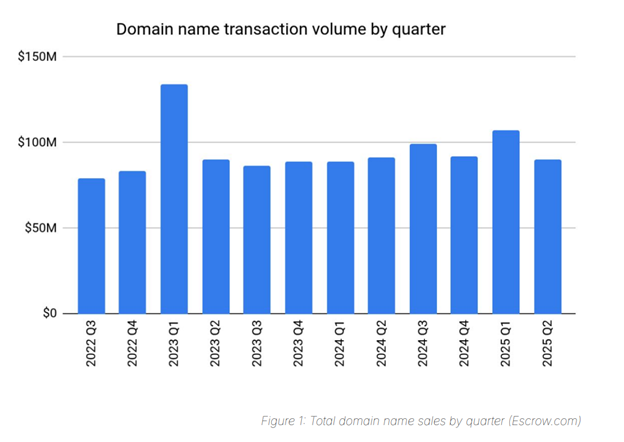
Source: Escrow.com
These are big numbers. But, what analysis criteria is best when assessing domain name value? How do professionals determine what makes a domain name valuable?
Let’s explore the non-negotiable domain valuation checklist for a serious domain investor.
Length and simplicity – One factor that determines brandability is the length (and simplicity) of a domain. Short, easy-to-spell names are easier to brand and market.
Top-level domain (TLD) – Since the 1990s, the .com TLD has consistently dominated the market, so it’s always a good pick. Even so, other TLDs (.ai, .co, and ccTLDs), can be highly lucrative based on trends and market dynamics.
Keyword relevance & search demand – Domains aligned with searched terms often carry higher demand. They make marketing easy and branding straightforward.
Brandability – Many times, brandable domains simply catch the attention of the market. Unique, memorable names can outperform exact-match keywords.
Market demand & buyer intent – The value of a domain is also dependent on intrinsic value. A domain is only worth what someone is willing to pay.
The above are crucial domain investing basics to consider when estimating domain value.
How Does SEO and Existing Performance Affect Domain Valuation?
An often overlooked contributor to a domain’s value is SEO. Traffic is a major factor to the success of an online business and SEO helps quantify traffic metrics.
Here’s how:
Reduced marketing costs – Domains with existing organic traffic and searchability reduce the marketing costs significantly.
Trust and credibility – Search engines typically rank the trustworthiness of a domain based on the number of backlinks and authority it has.
Domain cleanliness – SEO is a filter for domains that have been blacklisted, reported, or penalized before.
Go-to-market visibility – For businesses and investors that want quick visibility, no other metric is crucial as SEO.
How to Assess and Estimate Domain Value
By now, it’s clear that domain names can be great assets. So let’s lay out the step-by-step framework (which we use here at Bishopi) to estimate domain value like a pro.
Step 1: Evaluate Keyword Demand and Trends
Like any other asset, user interest for an asset is what drives up its value. If there is a clear search interest for a domain keyword or term, the market responds by driving up its value.
As a domain investor, your goal is to understand the demand metrics for a particular domain. Analyze if people are searching for terms related to the domain and why.
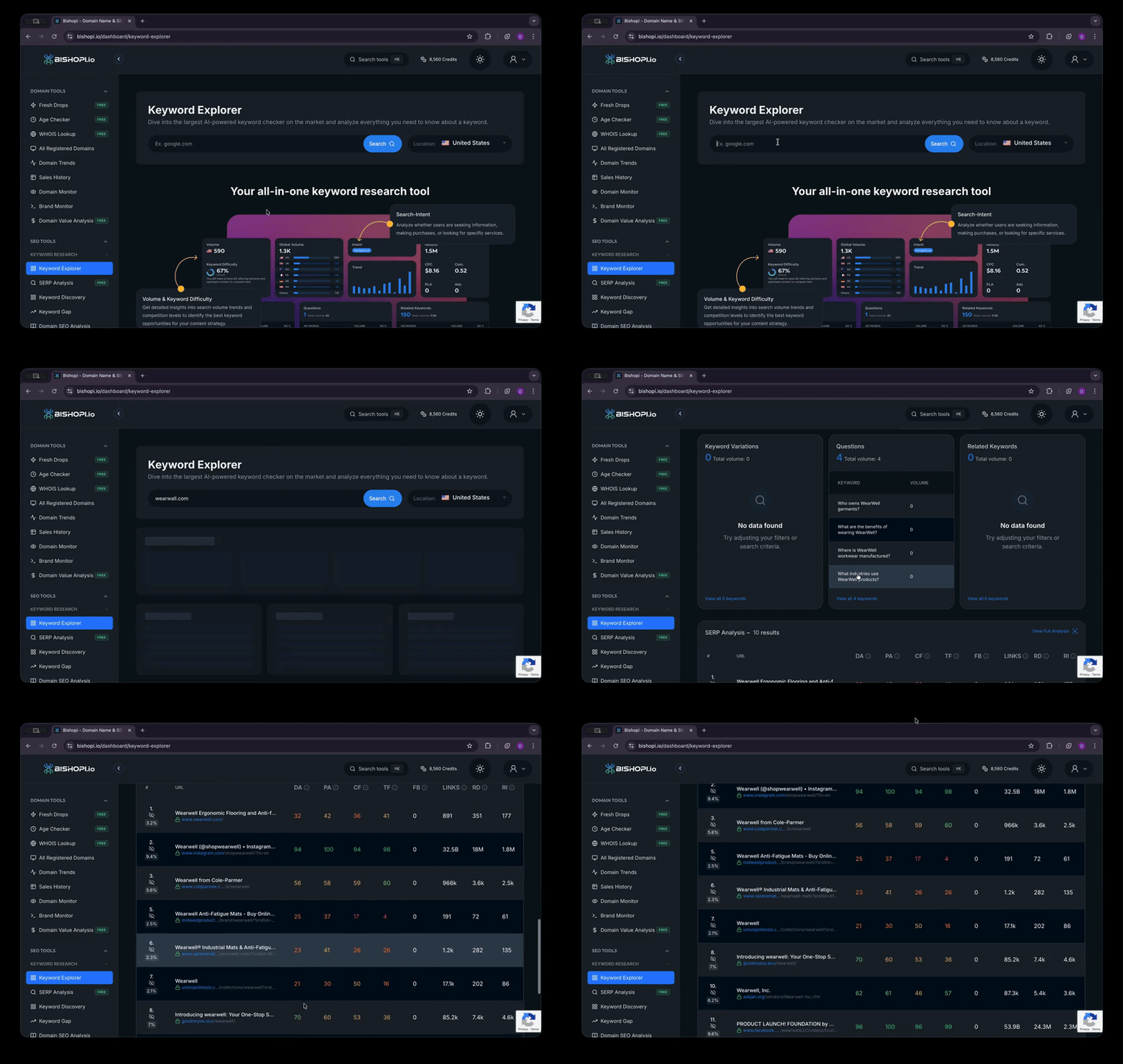
Having the ability to quickly and deeply analyze keyword demand, search trends, and search intent gives you an edge. Which is what we achieve with Bishopi.
Step 2: Analyze SEO Metrics and Authority
As indicated earlier, SEO metrics show the reality of a domain's potential in the market. Organic visibility cuts budgets and backlinks signal authority.
While some domains appear “brandable” on the surface, you cannot truly tell their SEO potential. You have to analyze it professionally to get the real insights.
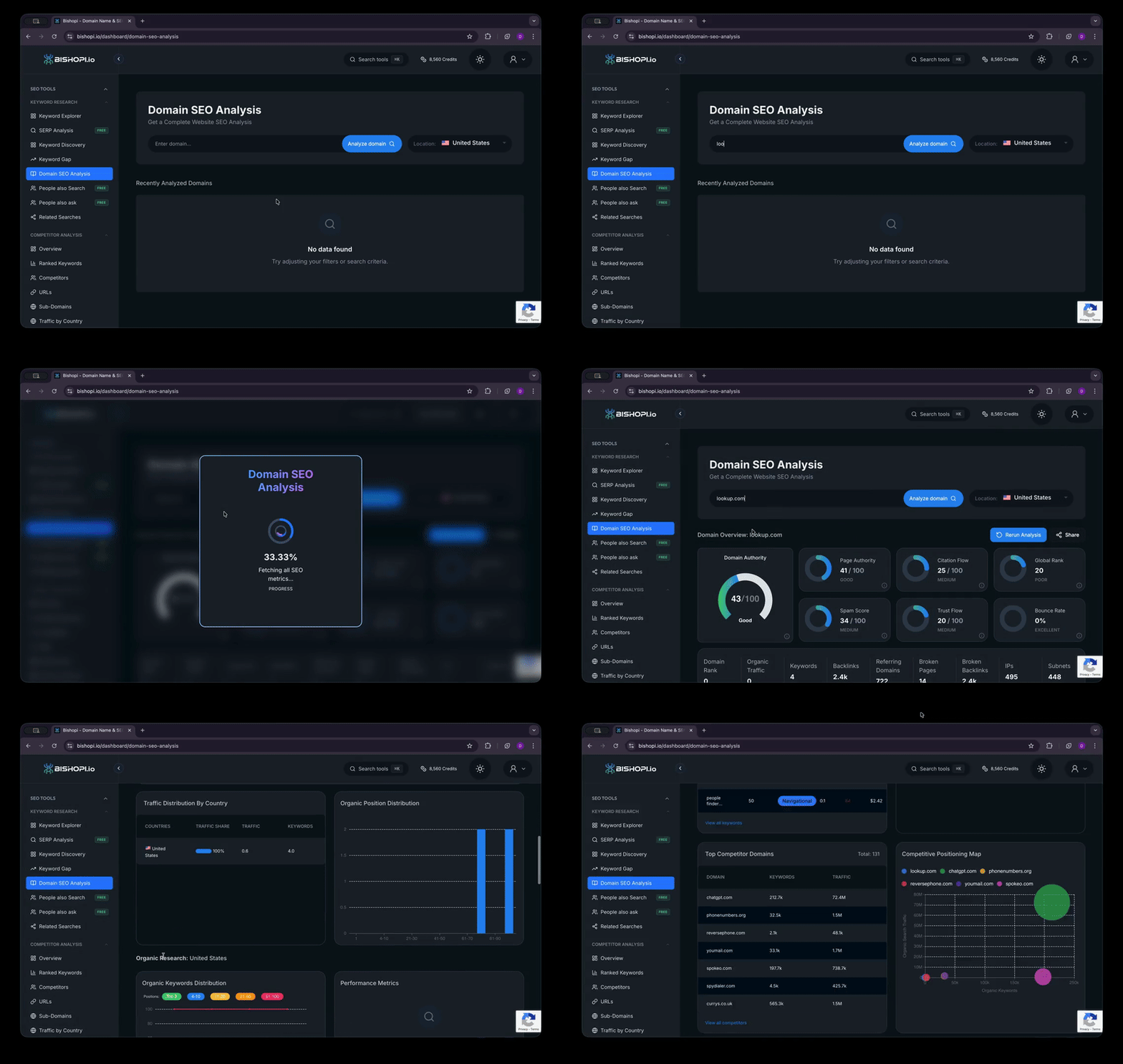
Bishopi helps you skip the guesswork and assess a domain's assets, strength and performance in the real market.
Step 3: Compare Against Market and Competitors
One of the quickest ways to validate an asset is to look at the market.
Market and competitor analysis gives insights like competitive advantage, revenue potential, and business-worthiness.
You should always compare your domain asset to similar alternatives to get an accurate picture of your assets position.
Domain appraisal tools that allow you to perform market and competitor domain analysis are rare. It’s often difficult to get an answer to “how much is a domain name worth?”
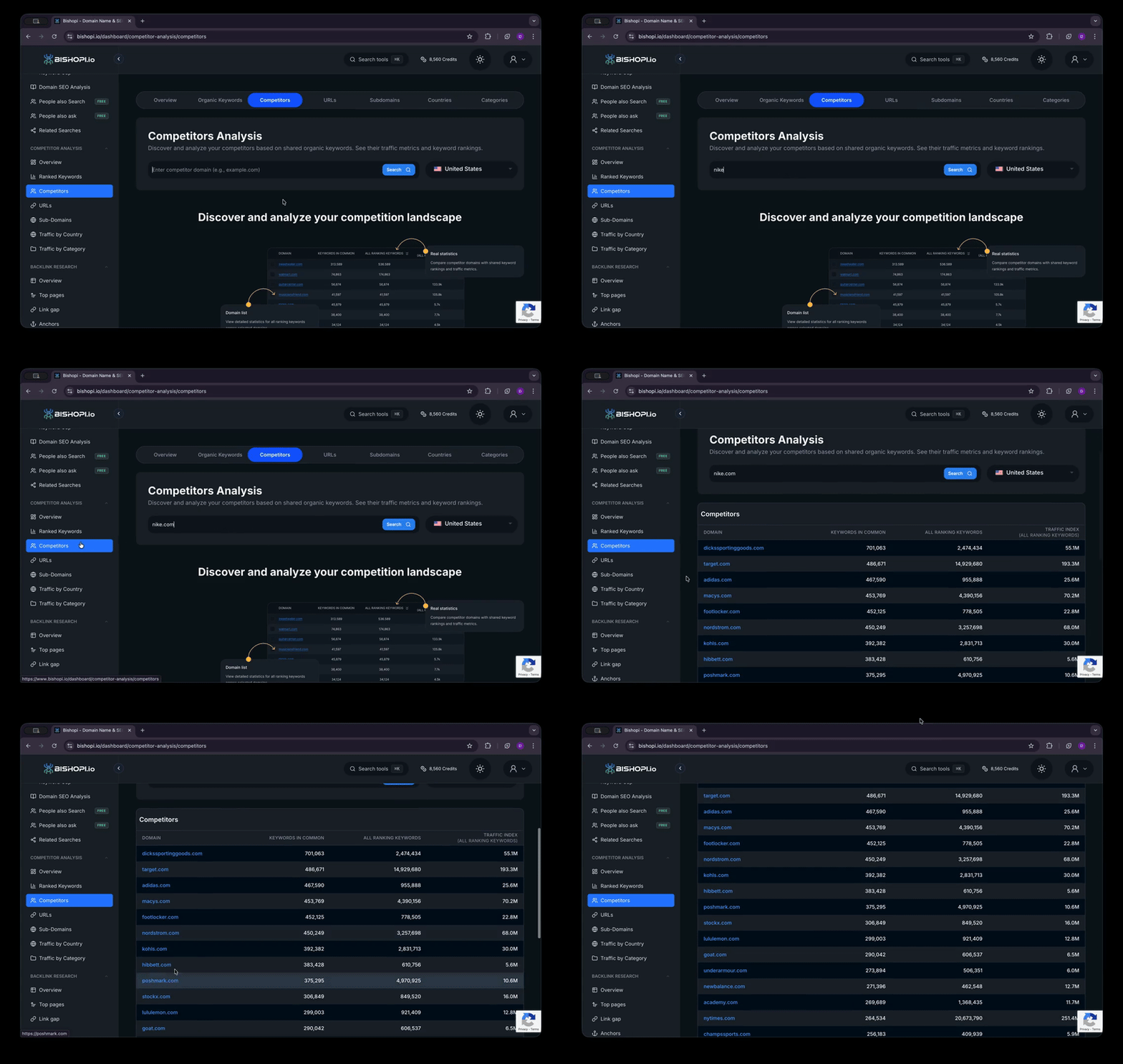
Bishopi understands the importance of relative value. The platform’s features are within one dashboard for quick analysis.
Step 4: Make a Data-Backed Valuation Decision
A key challenge investors face during domain name valuation is weak or insufficient data. While no tool can give you the “perfect price” for an asset, good data reduces risk.
Ultimately, every investor understands that investing is not risk-averse. The goal, therefore, is to significantly reduce investment risk by leveraging available data.
In the world of domain investing, a data-driven tool that supports analysis and helps inform decisions is invaluable.
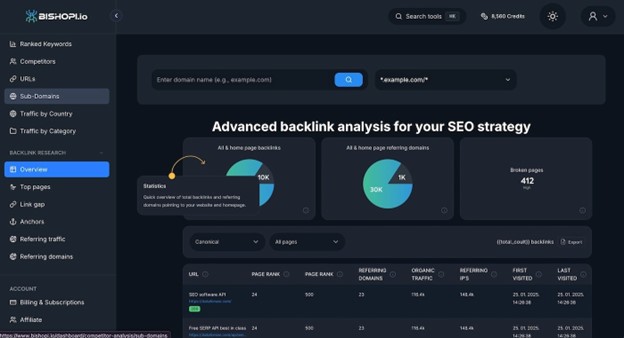
Bishopi is definitely not a magic valuation machine, but a decision-supporting tool.
The Bishopi metrics suite makes choosing and investing in a domain frictionless.
Other Tools and Data Sources That Inform Domain Valuation
While Bishopi is comprehensive, you will find a lot of domain analysis standalones in the market. Some of the tools often used when analyzing domains include:
Keyword research tools e.g., Google Keyword Planner, Moz, SEMRush, and Ahrefs.
SEO and backlink analysis platforms e.g., Moz Link Explorer, BuzzSumo, and Ubersuggest.
Historical domain sales databases for analyzing domain sales history. For example, GoDaddy Aftermarket Reports.
Domain marketplaces e.g., Afternic, Sedo, BrandBucket, and Dan.
These tools are great for resources for reference especially when looking for specialized data and reports.
Domain Names Can Be Worth Money
In summary, domain names can be valuable and worth money. But the prerequisite to investing in a domain is extensive research. Data, reliable insights, and analytics will help you determine the value of a domain, and hence, if it’s worth investing in.
Before investing in any domain, even one that “looks good”, run it through real data. Get the real insights on traffic, market dynamics, and demand potential.
Bishopi helps founders, marketers, and domain investors assess domain value using SEO and market signals that matter. Explore Bishopi to evaluate domain names using real SEO and search data before you buy, sell, or invest.
Originally published at: www.bishopi.io
Stay up to date
Get updated with all the news, update and upcoming features.