Premium Domains: Smart Investment or Overpriced Hype?
Before you spend a dollar, you need to know this. A premium domain can be a $50K brand asset that pays for itself in three years. It can also be an overpriced label on an empty name that a domain registrar inflated because it sounds good. The difference between those two outcomes comes down to one question you need to answer before you buy the domain: Is a premium domain worth it for your situation?
This article helps you answer that before you spend anything.
The domain industry will tell you that premium domains always pay off.
In practice, registrars make more money when you buy a $5,000 name instead of a $12 one. Brokers earn commission on every sale they close. Marketplace listings are optimized for conversion, not your ROI.
That doesn’t mean premium domains are a scam. Many are genuinely excellent investments. But no one in the sales funnel is going to tell you when to walk away. This article will.
The “Premium” Label Is Not a Standard
The term “premium domain” is applied inconsistently across registrars and marketplaces. Some domains are labeled premium because they have proven demand, history, and measurable value.
Others are labeled premium because a registry decided they look valuable. This means that two domains listed as “premium” at the same price point can have fundamentally different value profiles.
Let’s take a look at the distinction.
Registrar-Premium vs. Aftermarket-Premium Domain Name
Registrar-premium domain names for sale are those that have never been privately owned. The registry decided to price it above the standard registration fee, often because the name is short, memorable, dictionary-clear, or keyword-rich.
For instance, you could register “loans.com” today, but the registry will charge you thousands, not $12, because it's been flagged as a premium asset.
An aftermarket-premium domain is a completely different animal. It has a prior owner, and often a prior life. It may carry real backlinks, traffic history, domain authority, and brand recognition.
Here is a simple real-world comparison.
Imagine two apartments:
One has been rented for years in a busy neighborhood with strong demand
The other is newly built, never occupied, and priced high because it looks modern
If both are labeled “premium,” the label itself tells you nothing about actual value.
Domains follow the same pattern.
This confusion matters more today because competition is rising. With over 1,400 new generic top-level domains delegated by ICANN since 2013, domain investors are overwhelmed with options. That makes the “premium” label easier to misuse and harder to trust.
Why the Distinction Matters
Both types of domains get listed under the same “premium” banner on the same marketplaces, sometimes at similar prices. One might be genuinely undervalued. The other might be priced purely on gut feel. The label alone tells you nothing.
That distinction is the foundation of every decision you’ll make in this article. And the stakes are real. The domain aftermarket is a multi-billion-dollar industry, and the premium label has become its most misused marketing term.
When Is a Premium Domain Worth the Price?
A premium domain is worth the price when it delivers measurable business value that would cost more to build from scratch. This usually happens when the domain strengthens trust, captures existing demand, or replaces expensive SEO and marketing efforts.
Here are the situations where paying a premium for a domain is often justified.
a) You’re launching a business where domain credibility is part of the brand
If your business operates in FinTech, healthcare, legal services, insurance, or any space where credibility is part of the product, a premium domain can carry real commercial weight. Consumers in these sectors make trust judgments fast, and your domain is one of the first signals they read.
The trust stakes are even higher at a macro level. According to Edelman’s 2024 Trust Barometer, brand trust has become a “buy or boycott” factor for 71% of global consumers.
That’s not just a branding consideration but also a revenue consideration. A premium domain that reinforces trust signals is part of the equation.
b) The domain is an exact match for a high-intent commercial keyword with measurable search volume
If a domain is an exact or near-exact match for a search query that buyers are already using, it can carry SEO value that goes beyond brand aesthetics.
The exact match domain value depends on several factors, but a domain like “austinplumbers.com” or “affordableaccounting.com” in the right niche can rank faster and higher than a branded alternative with equivalent content.
The keyword is “measurable.” If you can verify search volume for the keyword the domain targets, and if the domain genuinely matches buyer intent, that’s a defensible asset.
If the “keyword value” is speculative or the domain vaguely sounds like something people might search, that’s a different situation entirely.
c) The domain carries a clean backlink profile that would cost more to rebuild than the asking price
A domain that has accumulated 150 high-quality referring domains from relevant publishers over 10 years is an SEO asset that cannot be manufactured quickly. A new .com with equivalent content could take 3 to 5 years and significant resources to reach the same link equity.
The numbers make this concrete. According to BuzzStream’s 2024 link-building pricing analysis, a single high-quality, editorial backlink costs between $1,250 and $1,500 per unique link through digital PR.
That means a domain with 150 quality referring domains represents a link-building investment that, at market rates, could cost you nearly $190,000 to replicate from scratch.
If you’re entering a competitive niche and SEO is central to your growth plan, buying a high-value domain with a clean, relevant backlink profile can be significantly cheaper than building one from scratch. You’re not buying a name but a head start.
d) When comparable sales data supports the price (not just the seller's opinion)
The seller’s opinion of a domain’s value is not comparable sales data. Actual comparable sales data means verified transactions of similar domains, in recent market conditions.
If the comparable sales data for 5-letter .com names in your category cluster around $8,000 to $15,000, and you’re being asked to pay $11,000, you’re in a supported price range.
If the seller is asking $60,000 with no comps to back it up, you’re being asked to accept the seller’s floor, not the market’s.
Always verify the price against the market before negotiating anything using tools like Bishopi's domain sales history.
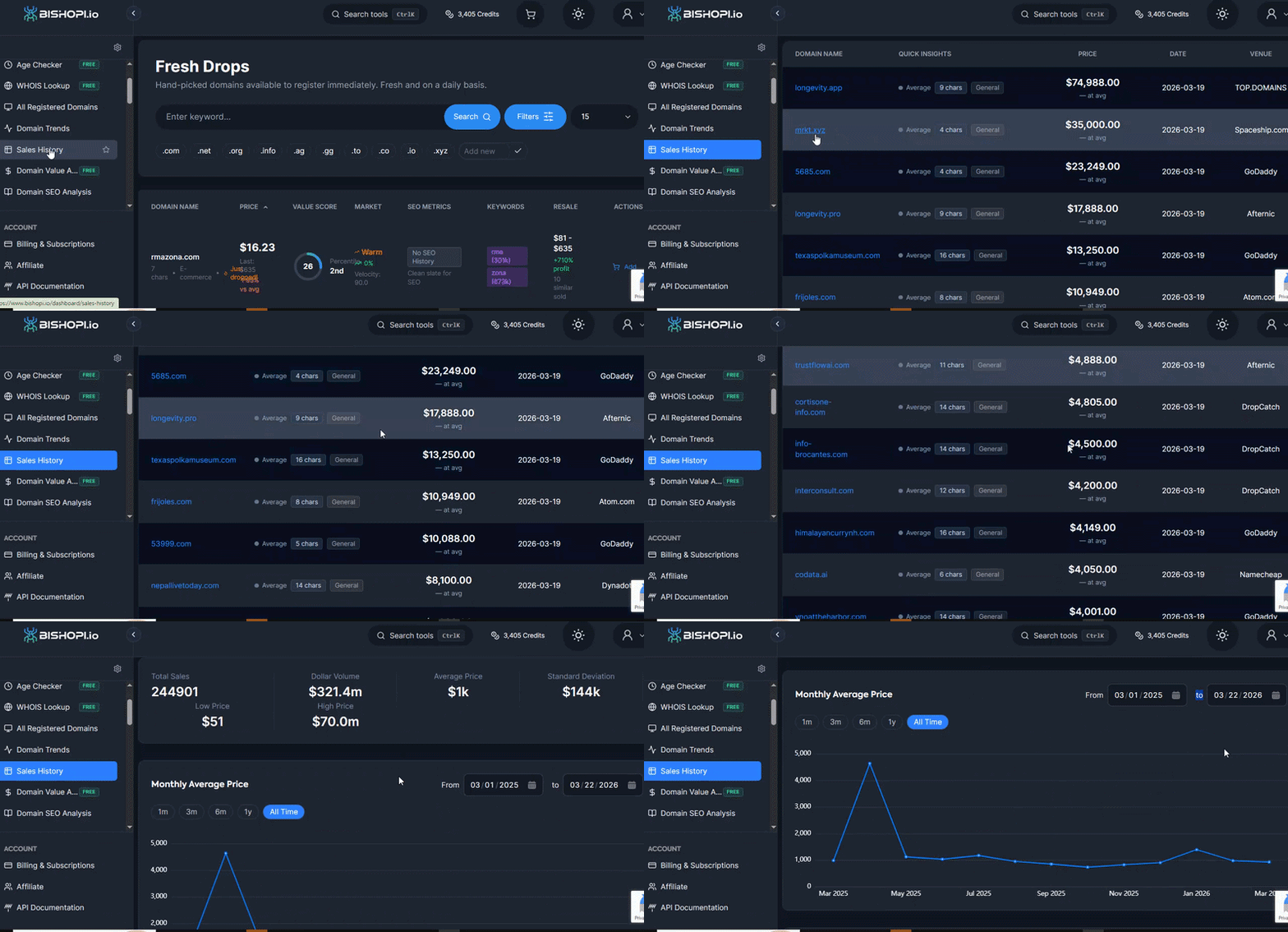
e) When the cost of alternatives is higher
Always compare the premium price to what it would cost to achieve the same outcome without it.
Ask yourself:
How much would I spend on branding to compensate for a weaker name?
How much would I spend on ads to offset lower click-through rates?
How long would SEO take to build comparable authority?
If the premium domain shortens timelines or reduces spend in a meaningful way, you can consider it a worthwhile investment.
When Are Premium Domains NOT Worth the Price?
Premium domains are not worth the price when they are driven by hype instead of data. This often happens with early-stage startups, registrar-priced domains with no history, or names that rely purely on perceived brandability without measurable demand.
This is where most buyers get it wrong. Not because premium domains are bad, but because they buy them at the wrong time, for the wrong reasons, or at inflated prices.
Here are the most common scenarios where premium domains do not make sense.
a) When you have not validated your idea yet
If you are still testing a business idea, spending five figures on a domain is usually a mistake.
At this stage, your biggest risk is not branding. It is whether the product works.
A simple, low-cost domain gives you flexibility. If the idea pivots, you are not anchored to a sunk cost.
Many successful startups started with basic domains and upgraded later, once the business proved itself.
b) Registrar-labelled 'premiums' with no prior ownership, traffic, or keyword demand — the price is the registry's floor, not a market signal.
Many domains sold as “premium” by major registrars have never been owned before and carry no backlinks, traffic, or brand history. The domain registries priced them above standard domains because the name is short or keyword-adjacent, not because there’s a market transaction history supporting that price.
A name like “swiftlend.io” might cost $3,000 at a registrar premium tier. It’s a clean name. It sounds fintech-adjacent. But it has no SEO history, no backlinks, and no proof that the market values it at $3,000 rather than $12. You’re paying the registry’s floor price, which is set by their algorithm, not by what similar names have actually sold for.
This doesn’t mean registrar-premium names are never worth buying. It means you need to evaluate them differently. The premium price is a starting point for your research, not evidence of value.
c) Non .com TLDs priced at .com parity.
Not all extensions carry the same weight.
A .com domain still holds the strongest global recognition and trust. When alternative extensions are priced at the same level, you need a strong justification.
In most cases, that justification is missing.
If a .co, .io, or niche domain extension is priced like a comparable .com, you should question the valuation immediately.
d) Domains where the 'premium' is brandability alone, with no data behind it.
Some domains are priced purely on how they sound. Short, catchy, and memorable.
These are all important factors of a good domain name, but they are not enough on their own.
If there is no search demand, no traffic, no comparable sales, and no strategic advantage, you are paying for subjective appeal.
Brandability becomes valuable when it aligns with business outcomes. Without that, it is speculation.
A Simple Decision Framework
Use a structured checklist to evaluate whether a registry premium domain is worth pursuing. If multiple criteria point to a measurable value, it may justify further research. If not, the price is likely driven by perception rather than real demand.
You do not need a complex model to make a smart decision. You need a clear checklist.
Use this as a quick filter before you go deeper.
Criterion | Question to ask | Points if Yes |
Keyword match | Does this domain match a specific, high-intent search query with verified volume? | 1 |
Backlink history | Does the domain carry a clean, relevant backlink profile from credible sources? | 1 |
Sales comps | Do verified sales of comparable domains support the asking price? | 1 |
TLD fit | Is the TLD appropriate for your market, and priced accordingly (not at .com parity)? | 1 |
The $12 test | Could a new .com registration solve the same core problem for $12 and a year of brand-building? Score 1 if NO. | 1 if no |
Business stage | Is your business validated, revenue-generating, or at a stage where domain credibility has a measurable impact? | 1 |
If you score 3 or more points, the domain is worth investigating further. If you score 2 or fewer, you’re likely paying for a “premium” labeled domain, not an asset.
If the domain passes this filter, the next step is understanding how to find and evaluate one in detail, including verification, negotiation, and risk assessment.
You must also work through this checklist with actual domain data rather than gut feel. For the keyword match criterion, use a keyword research tool with comprehensive data for real search volume.
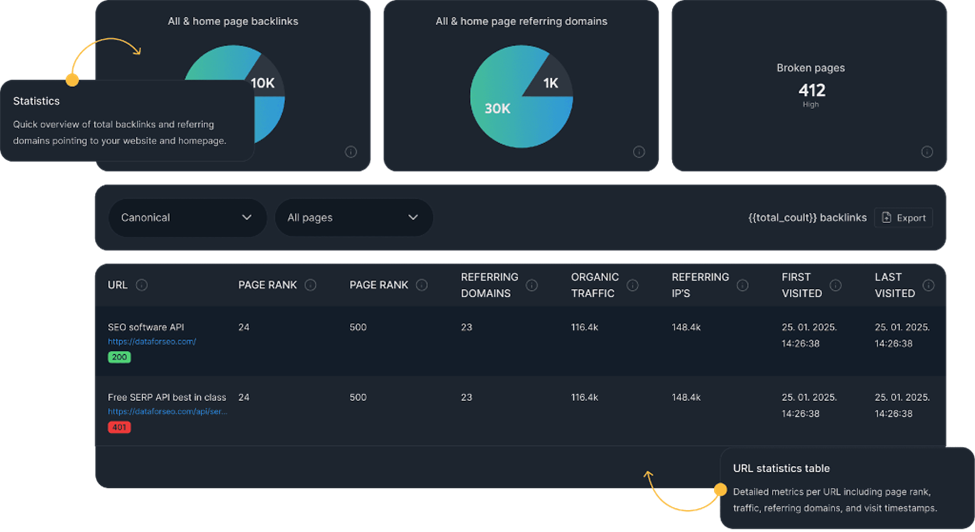
For the backlink history criterion, run the domain through a link analysis tool like the one offered by Bishopi and look at the quality and relevance of referring domains, not just the raw count.
For the sales comps criterion, look at verified domain auction records, not asking prices on listing pages.
Get a Valuation Before You Decide
Before committing to any premium domain price, run an independent domain valuation. Why? Because seller-provided estimates and marketplace asking prices reflect the seller’s interest, not the domain’s actual market value.
An independent valuation benchmarks the domain against real market transaction data, backlink quality, traffic patterns, and keyword relevance, to give you a neutral baseline before negotiations begin.
Tools like Bishopi's domain value analysis can help you analyze real data to determine a domain name's value before you invest in it.
The Value is in the Data, Not the Label
“Premium” is a marketing label. It tells you that someone, whether a registry algorithm or a marketplace listing, has decided this name is worth more than standard registration.
What it does not tell you is whether that price reflects actual market demand, SEO value, or strategic fit for your specific situation.
Use the framework to determine whether a domain is worth the price on the tag.
Frequently Asked Questions
How do you know if a premium domain is fairly priced?
Compare it against verified comparable sales data from domain auction records, not the seller's asking price. Tools like domain sales history databases show what similar names actually sold for. If no comparable transactions support the price, you're paying the seller's floor, not the market's value.
What is a premium domain name, and why is it expensive?
A premium domain name is priced above standard registration due to perceived or proven value. This may come from keyword relevance, brandability, past ownership, or SEO assets like backlinks. However, pricing isn’t standardized. Some premiums reflect real market demand, while others are inflated by registrars without supporting data.
Are premium domains worth the investment for new businesses?
Premium domains are usually not worth it for unvalidated or early-stage businesses. At this stage, flexibility matters more than branding. A low-cost domain allows you to test ideas without significant risk. Investing heavily only makes sense once your business model, audience, and revenue potential are proven.
How can you tell if a premium domain is actually valuable?
Evaluate a premium domain using measurable factors like keyword search volume, backlink profile quality, comparable sales data, and relevance to your business. If the domain reduces marketing costs or accelerates SEO growth, it may justify the price. Without data, the “premium” label alone has little meaning.
What is the difference between registrar-premium and aftermarket domains?
Registrar-premium domains are priced higher by registries despite having no ownership history, traffic, or backlinks. Aftermarket domains, however, have been previously owned and may include SEO value, brand recognition, and existing traffic. This distinction is critical, as only aftermarket domains typically offer proven, data-backed value.
When should you avoid buying a premium domain?
Avoid premium domains when pricing is based on hype, brandability alone, or unsupported assumptions. This includes domains with no traffic, no backlinks, or no comparable sales data. Also, be cautious when non .com domains are priced similarly to .com equivalents, as they often lack equal trust and market demand.
Originally published at: bishopi.io
Stay up to date
Get updated with all the news, update and upcoming features.