AI Search Engine Optimization Tools in 2026: What Actually Works (And What Doesn’t)
AI SEO tools are having a peak moment in 2026.
For years, there was almost no search demand. Over the last two years, it climbed fast. And last month, it hit its highest point.
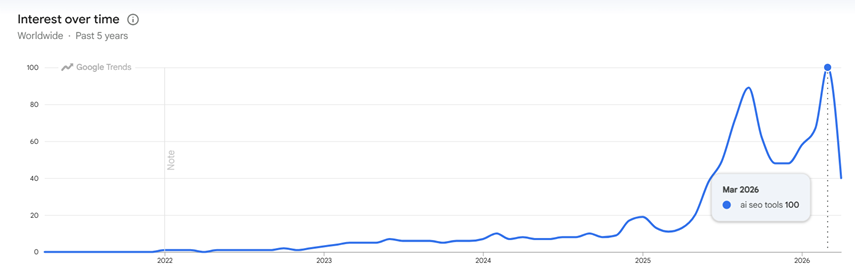
[Screenshot via Google Trends]
There are more AI search engine optimization tools than most teams can realistically evaluate.
Most SEO tools in the market fall into two buckets: content tools with an AI label, or dashboards built on data you could access directly.
That makes evaluation harder, not easier.
The real question isn’t which tool has AI - it’s which one actually changes how you work.
We tested the leading AI search engine optimization tools inside real workflows: content production, AI visibility tracking, technical execution, and programmatic SEO. Some deliver. Many don’t.
This is a shortlist of the tools that actually move the needle in 2026 - with clear verdicts on where they fit, and where they don’t.
Quick Comparison: AI Search Engine Optimization Tools (2026)
Tool | Best For | Key AI Feature | Who It's For | Notes |
Semrush AI Toolkit | AI visibility tracking + competitor benchmarking | Brand mention tracking across ChatGPT/Perplexity | Enterprise teams, agencies | Best-in-class data breadth; expensive |
Surfer SEO | Real-time on-page content scoring | AI Tracker for brand visibility in AI answers | Content teams, writers | Easiest UX; limited to content layer |
Bishopi (API Suite) | Domain Analysis, Competitor Analysis, SERP API, Backlinks API, Traffic data - programmatic | API-first data layer - no dashboard overhead | Developers, data-savvy SEOs, agencies | Raw data access without SaaS overhead |
Frase | SERP research + GEO-aware content optimization | Dual Google + AI search optimization | Solo creators, small teams | Affordable; dual Google + AI optimization |
Clearscope | NLP-driven topic & keyword recommendations | A-to-F content grading, semantic depth scoring | Enterprise content teams | Best-in-class recommendations; pricey |
Rankability | Content optimization + AI search tracking (SPI scoring) | IBM Watson + Google NLP dual scoring | Agencies | Strong dual NLP + weekly coaching calls |
Search Atlas / OTTO | All-in-one SEO with automated technical fixes | OTTO deploys fixes directly to your site | Agencies managing multiple sites | AI deploys fixes directly; broad feature set |
AlsoAsked | PAA topic clustering for AI query fan-out | Maps question clusters for AI engine coverage | SEOs, bloggers | Niche but accurate; limited scope |
Screaming Frog | Deep technical crawls + light AI automation | Alt-text generation, AI-assisted auditing | Technical SEOs | Gold standard crawler; not a content tool |
Which Is The Best AI SEO Tool in 2026?
We tested these tools in real workflows, with a clear lens: where each one delivers and who it’s built for.
That’s how this list is structured:
1. Semrush AI Visibility Toolkit
Semrush is the market leader in traditional SEO data, and its AI expansion is the most comprehensive in the category.
Their AI Visibility tool tracks where your brand surfaces inside ChatGPT, AI Overviews, and Gemini answers - not just Google SERPs - and competitor benchmarking runs across all of those topics simultaneously.
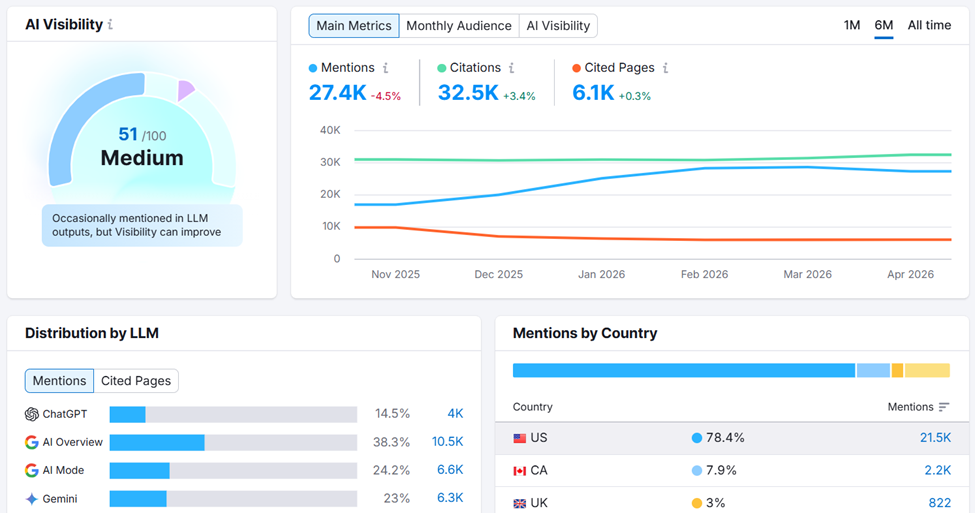
What's new in 2026: Brand mention tracking across LLM-generated answers is now a core product feature, not a beta add-on. It's the most fully developed AI visibility tool available.
Pricing: The AI Visibility Plan is available for $99 per month per domain.
Verdict: Best data breadth in the market, and the right call for enterprise teams and agencies that need one platform covering everything. The price puts it out of reach for teams under 10–15 people.
2. Surfer SEO
Surfer is the standard for on-page content optimization - real-time NLP scoring as you write, Google Docs integration, and clear guidance on term coverage and structure. Their AI Tracker now monitors brand visibility in AI-generated answers, adding a GEO layer to what was previously a pure content tool.
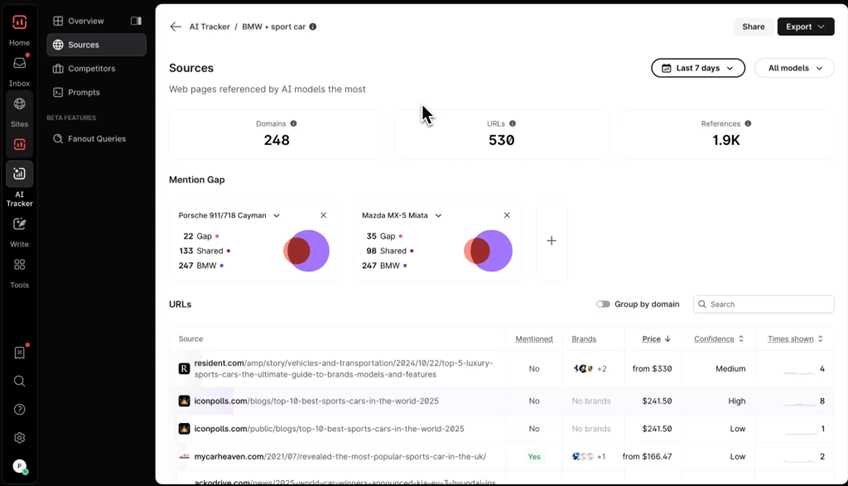
Image via Surfer SEO
What's new in 2026: The AI Tracker bridges on-page optimization with AI visibility signals in a single workflow. It is useful for content teams that don't want to manage two separate platforms.
Pricing: Plans range from $99 to $299 per month.
Verdict: Best UX for writers and content teams.
If your primary bottleneck is content production quality rather than competitive intelligence or technical SEO, Surfer is the most friction-free option on this list.
3. Frase
Frase was one of the earliest AI seo software platforms to explicitly build for Generative Engine Optimization.
It pulls SERP data and AI answer patterns into a unified content workflow, optimizing simultaneously for Google rankings and LLM retrieval.
They also have a free GEO score checker where you can get suggestions on how to optimize your content.
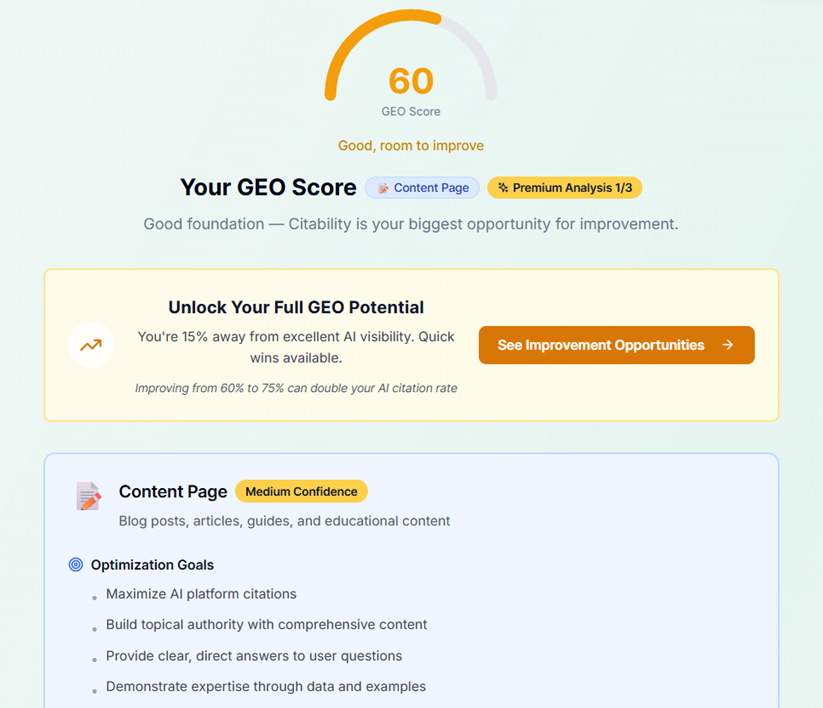
What's new in 2026: Dual optimization - Google and AI search - is the default mode, not a premium toggle. For teams on a budget who can't run separate GEO and SEO workflows, that's a meaningful consolidation.
Pricing: Plans range from $49 to $299 per month.
Verdict: Best value for solo operators and small content teams. Strong on GEO-aware optimization for the price. The competitive analysis features are shallow compared to dedicated tools, and the interface didn’t impress us - but if budget is a real constraint, Frase delivers more per dollar than most alternatives.
4. Clearscope
Clearscope's NLP term recommendation engine remains the most accurate for semantic content grading. A-to-F scoring, unlimited seats on paid plans, and tight Google Docs integration make it the natural home for high-volume content teams. It doesn't track AI visibility or handle technical SEO.
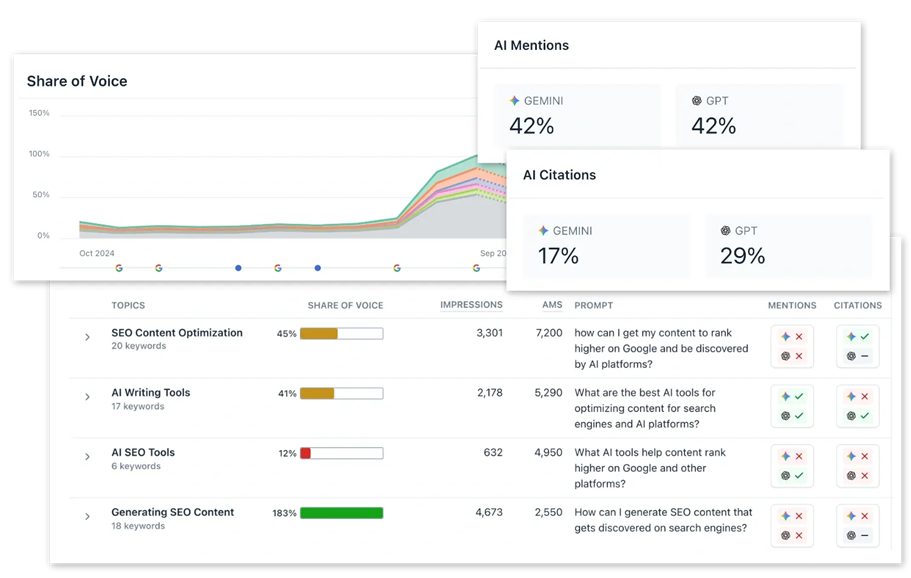
What's new in 2026: The grading model has been updated to reflect AI Overview content patterns alongside traditional SERP signals, narrowing the gap between optimizing for Google and optimizing for LLM retrieval.
Pricing: Plans range from $129 to $299 per month.
Verdict: Best-in-class for content quality and topical depth.
The price is enterprise-level - smaller teams without dedicated content operations will find it hard to justify. If your primary output is editorial content at volume, and semantic accuracy is the priority, nothing on this list matches it.
5. Rankability
Rankability combines IBM Watson NLP and Google NLP for content scoring - more signal diversity than single-model tools - and adds an SPI (Search Presence Index) score tracking visibility across AI answer environments.
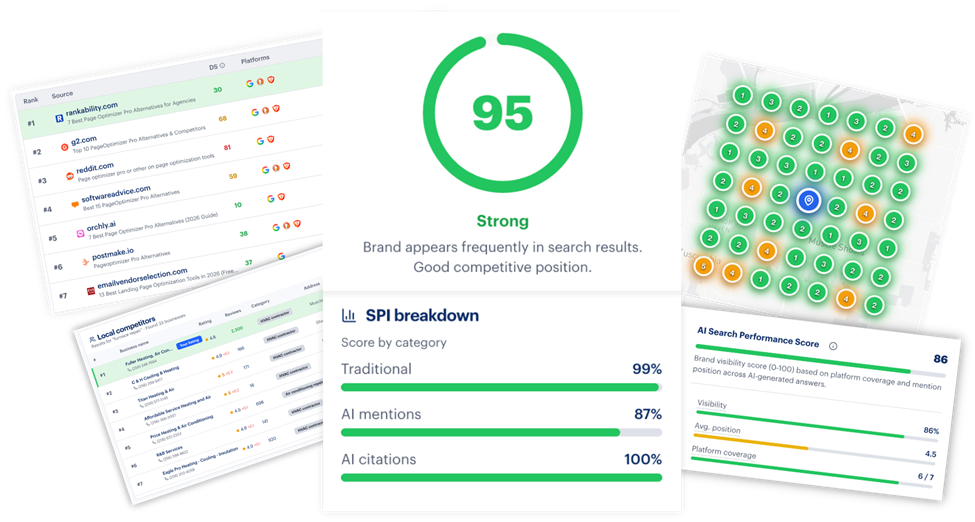
What's new in 2026: SPI scoring has become the headline metric. For agencies that need to report on AI search presence alongside traditional rankings, it's a genuine differentiator.
Pricing: Plans range from $199 to $799 per month.
Verdict: Strong for agencies that want content optimization and AI visibility in one platform. The weekly coaching calls are unusual at this price point and are worth it for teams that want structured guidance alongside the tooling. Not a fit for teams needing raw data access or wanting to build custom workflows on the underlying data.
6. Search Atlas / OTTO SEO
OTTO SEO does something most tools don't: it deploys technical SEO fixes directly to your site rather than logging them in a report.
For agencies managing multiple client sites, the gap between "here's what to fix" and "it's fixed" is operationally significant. It's one of the most practical seo automation tools for high-volume agency work.
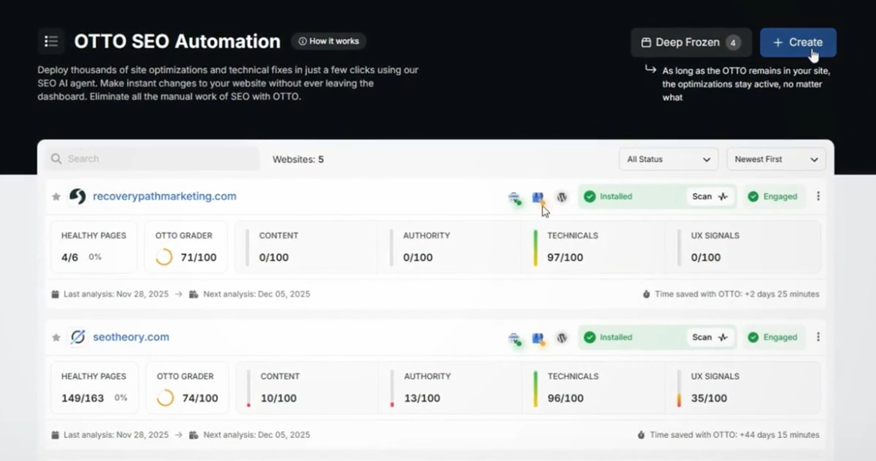
What's new in 2026: OTTO's automation coverage expanded substantially - it now handles a broader set of technical issues autonomously, without requiring manual deployment for each fix.
Pricing: Plans range from $99 to $999 per month.
Verdict: Best for agencies running technical programs at scale. The seo automation capabilities are the real value here, not the content features.
If you're managing 20+ client sites and technical backlogs are the bottleneck, the ROI is clear. Less compelling as a standalone tool for in-house teams or smaller operations.
7. AlsoAsked
AlsoAsked maps People Also Ask questions into visual topic clusters - directly useful for structuring content that mirrors how AI engines fan out from a root query. Three and four levels of question expansion are now supported from a single seed term.
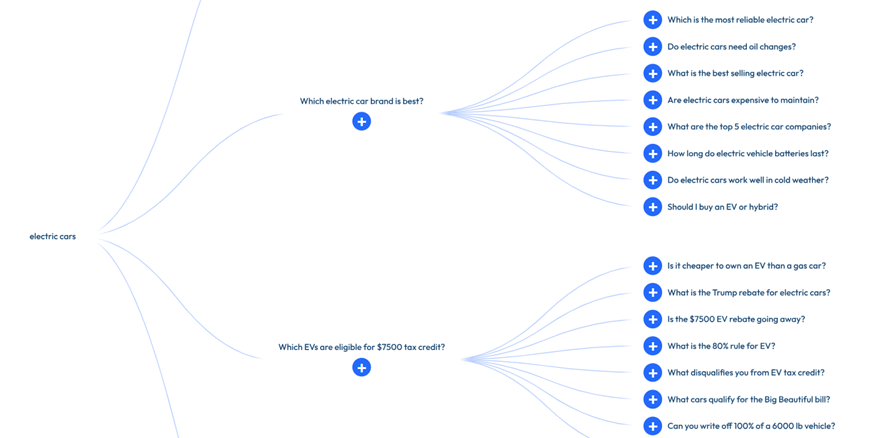
Screenshot via AlsoAsked
What's new in 2026: Improved cluster depth makes the tool more useful for mapping AI query patterns, not just traditional PAA optimization.
Pricing: Plans range from $15 to $59 per month.
Verdict: Niche tool with a specific, well-defined use case. But it's not a replacement for a full keyword tool and won't tell you anything about AI visibility, competitive positioning, or technical health.
8. Screaming Frog
Screaming Frog is still the gold standard for deep technical crawls. Recent versions added light AI automation - auto-generated alt text, basic content classification, AI-assisted log analysis - but the core value hasn't changed: it's the most thorough crawler available.
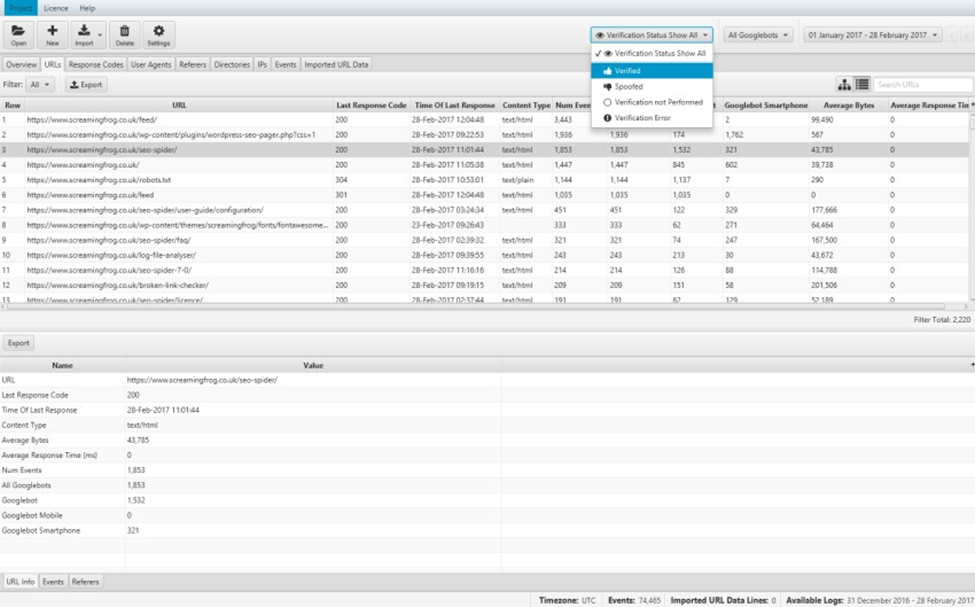
[Screenshot via Screaming Frog]
What's new in 2026: The AI additions exist. They're peripheral to what makes the tool worth using.
Pricing: Plans range from $0 to $235 per month.
Verdict: Every serious technical SEO should have this. It's not an AI SEO tool in the 2026 sense — it doesn't track AI visibility, optimize for GEO, or handle content. But no honest list of best seo tools is complete without it. If you're doing real technical audits, there's no substitute.
9. Bishopi - Domain Intelligence & SEO API
Bishopi isn't another SEO tool; it’s an API data layer. That's the first thing to understand.
That means it makes all the data available to you - Domain Analysis, Competitor Analysis, SERP API, Backlinks API, and Traffic data, all queryable directly.
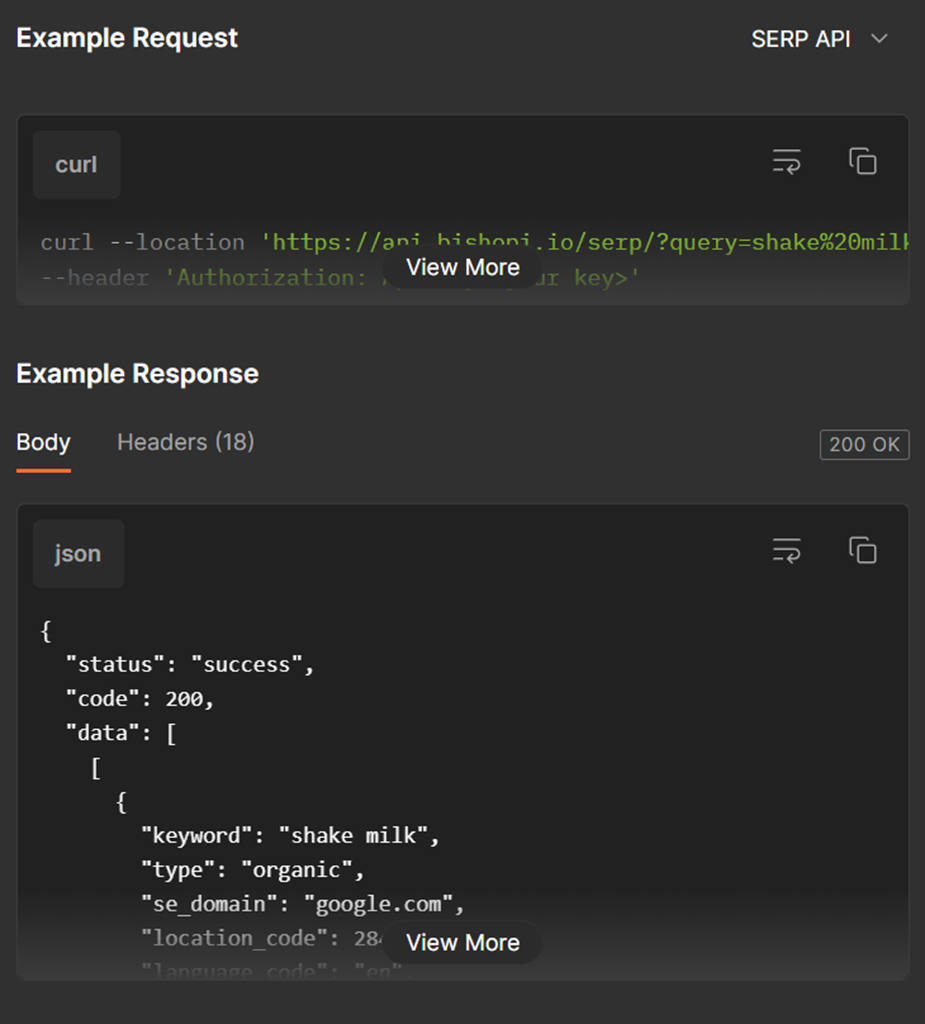
Image via Bishopi
You pull what you need, pipe it where you need it, and build the workflow your team actually uses. This makes it one of the few AI search competitive analysis tools built for programmatic use.
What's new in 2026:
As programmatic SEO scales and teams start treating search data as infrastructure, API-first access becomes essential. Bishopi covers the full data surface - everything that enterprise seo tools typically lock behind per-seat pricing.
Pricing: Plans range from $39 to $279 per month.
Verdict: It’s the right choice if your team writes code, runs seo automation at scale, or is done paying SaaS prices for data that should be queryable.
For developers building internal tooling, agencies constructing custom reporting pipelines, or growth teams running programmatic content operations, this is the most composable and cost-efficient option on this list.
What’s New in AI SEO and Search Optimization Tools in 2026?
We can compare features all day, but that only helps if the ground those tools operate on is stable. It isn’t. The way visibility works has shifted over the past year, and that changes what “good” looks like in a tool.
Before choosing anything, it’s worth recalibrating against how search actually behaves now.
Google rankings and AI visibility are two different signals now
Overlap between top Google results and AI-cited sources has dropped from ~70% to <20%. At the same time, nearly a third of US users are shifting to generative AI search. The result: ranking #1 no longer guarantees visibility. Most tools still track only one of these signals.
Being cited in an AI Overview is now the highest-leverage position
AI Overviews are already pulling clicks away from organic results (≈58–61% CTR drop for top positions).
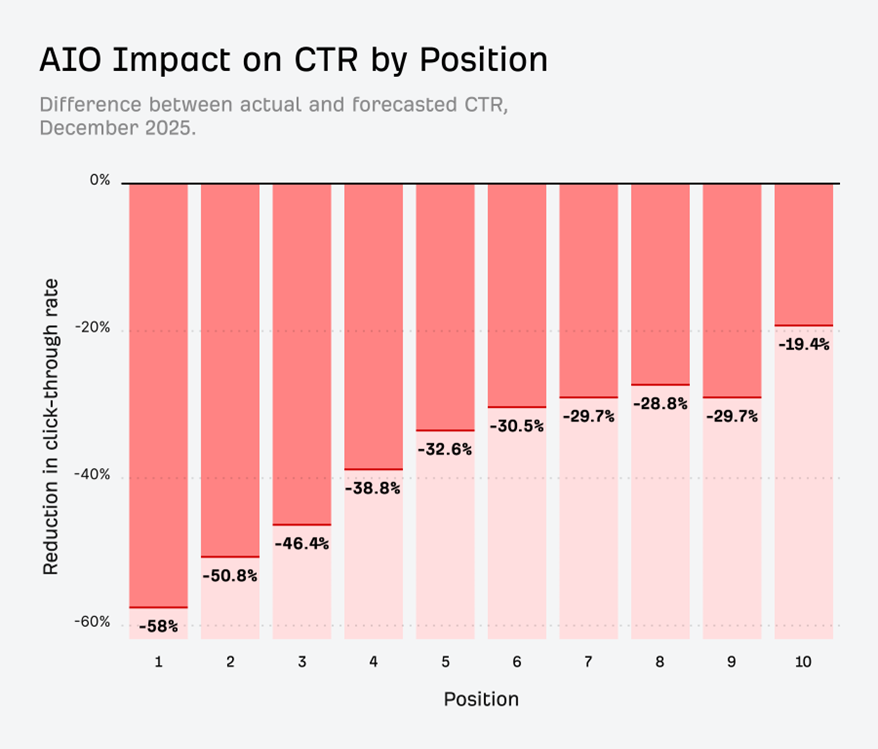
Image via Ahrefs
But cited brands inside those overviews outperform others on the same query (+35% organic CTR, +91% paid CTR). Visibility has shifted from ranking to inclusion.
The tool market corrected fast
A large share of tools launched in 2024 didn’t survive. What’s left tends to specialize - strong data or strong UX. Very few do both well, which creates gaps in how teams track this new visibility layer.
Scale teams are leaving per-seat SaaS behind
Over 60% of high-performing teams now use automation. The pattern: moving away from per-seat dashboards toward direct data access. Paying per seat for data you could query directly is starting to break at scale.
How to Compare AI Search Optimization Tools (and Choose the Right One)
With that baseline, our selection criteria narrow quickly.
To make it easier, we’ve also shortlisted three questions that you must ask before you make your final choice:
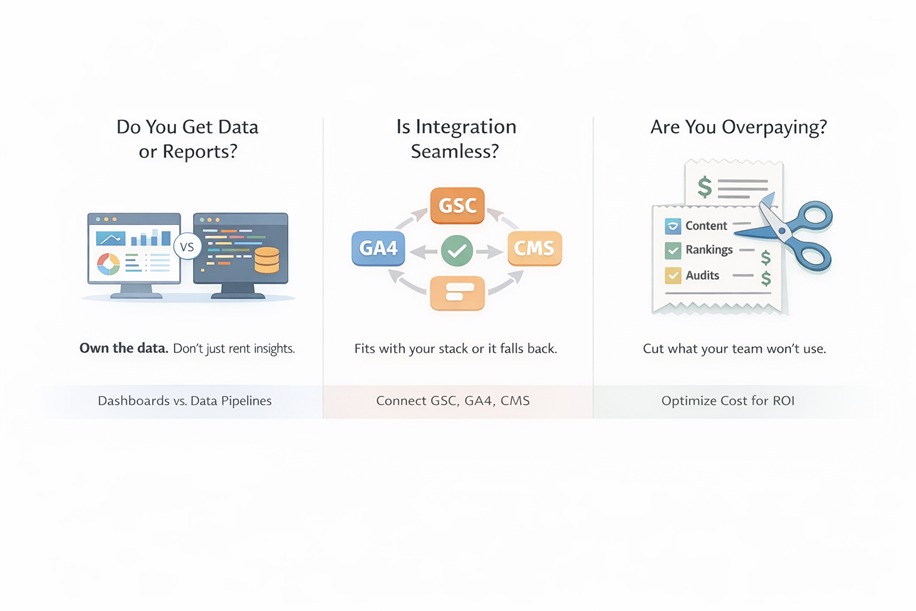
1. Are you getting data or just reports?
If you can’t export or query the underlying data, you’re locked into someone else’s interface. That’s fine for content teams. It breaks for programmatic SEO, reporting pipelines, and anything custom.
2. Does it fit your existing workflow or replace it?
Content tools should plug into Docs or your CMS. Data tools should connect via API. If a tool forces you into a new system, it won’t last more than a few weeks in real use.
3. Are you paying for features you don’t use?
Most AI SEO software bundles content, tracking, and audits into one price. If you only use one layer, you’re overpaying. The highest ROI setups are usually split: one tool for content, one for data.
That’s the real divide across AI search optimization tools in 2026 - not features, but how they fit into your stack.
Get the Best AI SEO Tool Now!
Most teams will end up using at least two tools here: one to guide content decisions, and one to power the data behind them.
That second layer is where most stacks break.
If you want direct access without per-seat limits, Bishopi’s API suite covers the core pieces: domain intelligence, competitor signals, SERP data, backlink data, and domain-level API access without the SaaS pricing structure.
You can plug into the Domain Analysis API, Competitor Analysis API, SERP API, and Backlinks API based on what your workflow actually needs.
This is where your data layer becomes your edge, not your constraint.
Build Your AI SEO Stack the Right Way
Originally published at: bishopi.io
Stay up to date
Get updated with all the news, update and upcoming features.